



Research & Development — 2025–2026
Baltic Biostimulants
From sea to surface. A circular-economy project that turns Baltic macroalgae into a certified biostimulant for turf — removing nutrients from an overloaded sea and returning them to living surfaces. Field trials are underway at the Living Lab, Hirsala Golf.
2025–26
Project period, led by Under Ytan
4.8 km
Cultivation rope deployed in the Archipelago Sea
€223,000
Ministry of the Environment support — Ahti programme
0
Negative effects observed in field trials to date
The idea
An environmental challenge, turned into a resource
The Baltic Sea holds an underused resource: nutrient-binding macroalgae. The project collects seaweed washed ashore and cultivates Cladophora glomerata on rope rigs, then converts the biomass into a high-quality biostimulant for golf courses and green areas.
Every harvest removes phosphorus and nitrogen from the sea, easing eutrophication — and every application reduces dependence on synthetic fertilisers. The product is being developed to meet the EU Fertilising Products Regulation (2019/1009).
The European biostimulant market is valued at €1.5–2 billion, and no Baltic macroalgae-based product exists on it yet.
We must use local, so far untapped resources with a small carbon footprint and a positive impact on nature. Our biostimulant meets these criteria.
Joel Lindholm — Project Lead, Under Ytan
Objectives
Five goals, one system: from sea to soil to surface.
Develop
A macroalgae-based biostimulant from beachcast seaweed and cultivated Cladophora.
Cultivate
Pilot rope-based growing that lets algae attach and grow naturally before harvest.
Restore
Remove phosphorus and nitrogen from the Baltic Sea with every harvest.
Validate
Improve soil and turf through bioactive compounds — tested on Finnish and Swedish golf courses.
Scale
Prepare a certified, circular product for market and attract investors to grow production.

Progress — July 2026
From lab to fairway
Fermentation works
After extensive testing of extraction methods, a fermentation-based process emerged as the most promising — now developed further with HAMK University of Applied Sciences.
Clearly below limits
Heavy metals and microplastics were analysed throughout. Every measured value has remained clearly below regulatory limit values.
Matches commercial products
In greenhouse trials the biostimulant performed at least as well as — and in some cases better than — commercial alternatives.
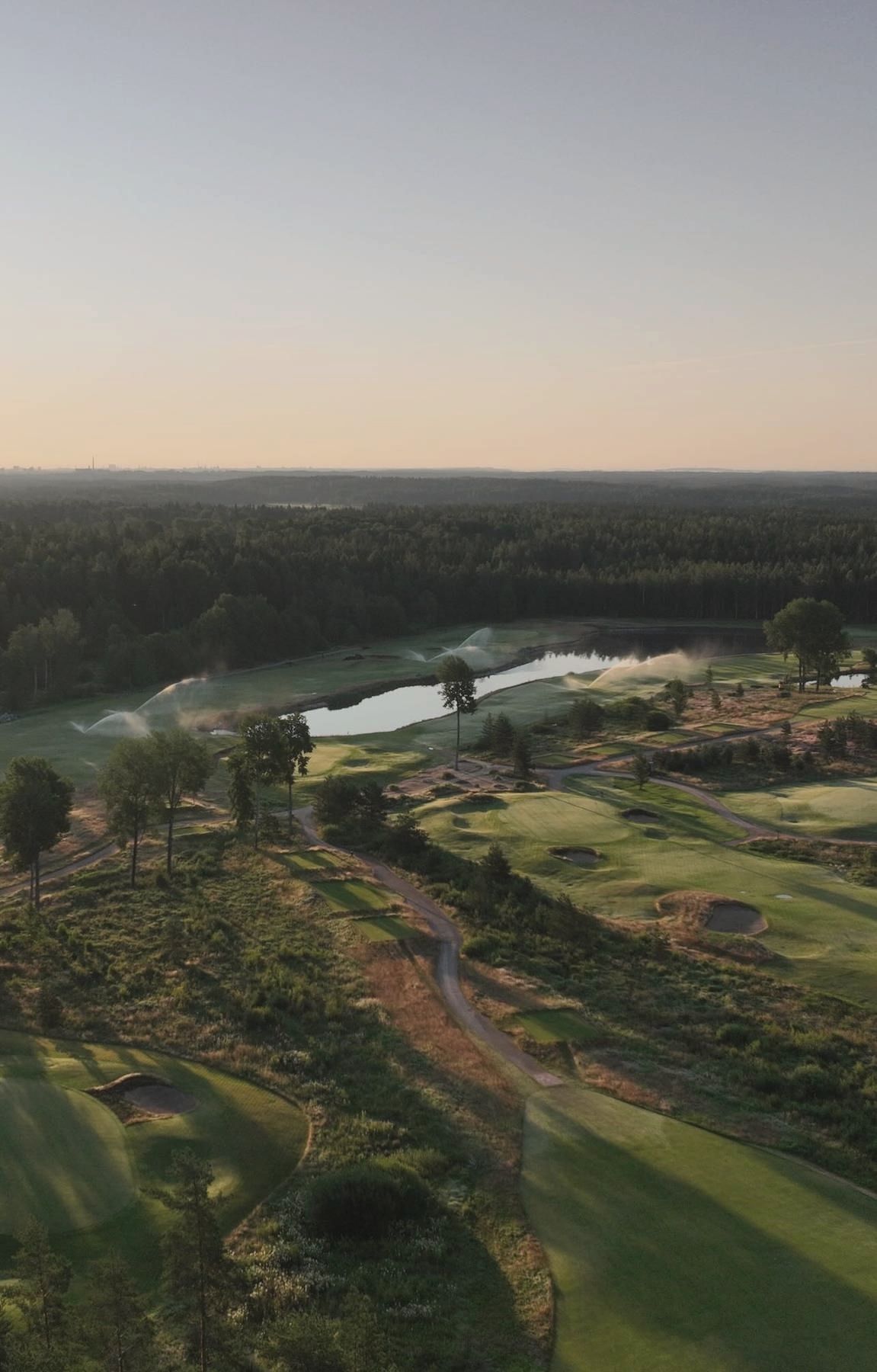
In spring 2026 the trials moved from the laboratory to the course. The biostimulant is now applied on selected fairways and all tees at Hirsala Golf as part of normal maintenance, monitoring turf growth, stress tolerance and overall health. No negative effects on turf or machinery have been observed — and the trials are next expanding to greens.
Scalability comes from knowledge. We can use local raw materials and adapt the methods to different environments — we believe the same model can work well beyond the Baltic Sea.
Janne Lehto MG — Turfgrass Mastery
Timeline
Biomass collection and rope cultivation, raw-material characterisation, first formulations and product development.
Field trials at Hirsala Golf, efficacy testing, new growing sites, market-entry strategy and business models.
Commercial upscaling, regulatory compliance, replication in other regions and assessment of long-term effects.
Partners
Under Ytan (project lead — Joel Lindholm) · Nemo Seafarms (Magnus Hanstén) · Nylands Fiskarförbund · Turfgrass Mastery (Janne Lehto MG). Supported by the Finnish Ministry of the Environment through the Ahti programme.




Read more: underytan.fi — Project Baltic Biostimulants · FGA 8/2025 · FGA 7/2026